FEATURES
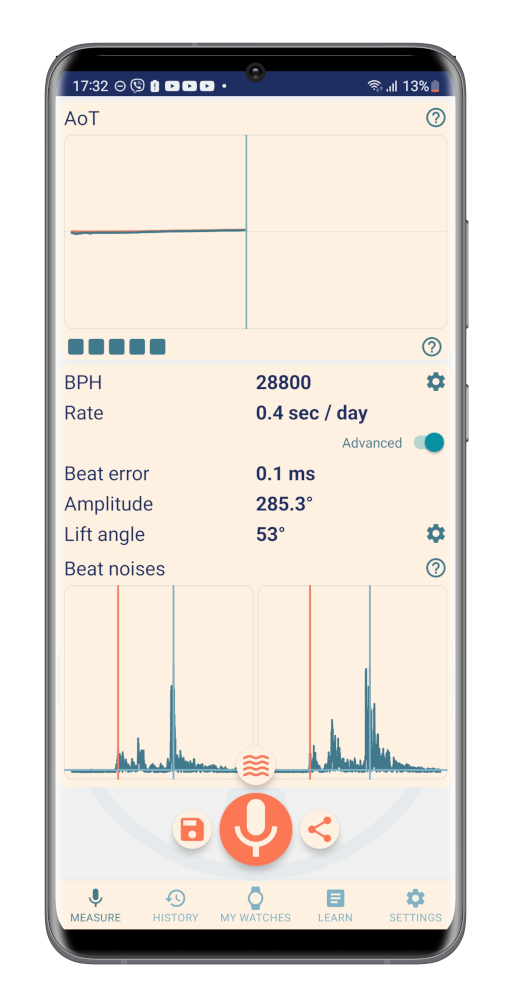
BPH
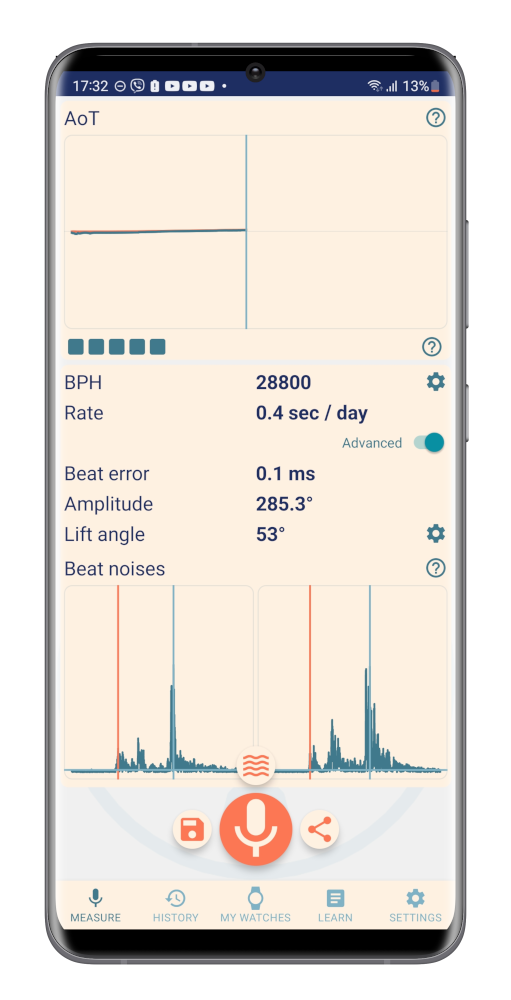
Beat Per Hour. This is the reference frequency of the watch movement. Can be set manually but can be calculated automatically during measurement.
Rate
The accuracy of the watch, expressed in +/- seconds per day.
Error
The asymmetrical oscillation of the balance wheel, expressed in ms.
Amplitude
The rotation of the balance wheel in degrees per oscillation.
Lift Angle
During every semi-oscillation the impulse pin enters the crown of the pallet fork, snaps the pallet fork to the next position and then the impulse pin is released. Lift angle is the angle in degrees between the entry and release. The value provided by the watch manufacturer, can be set manually.
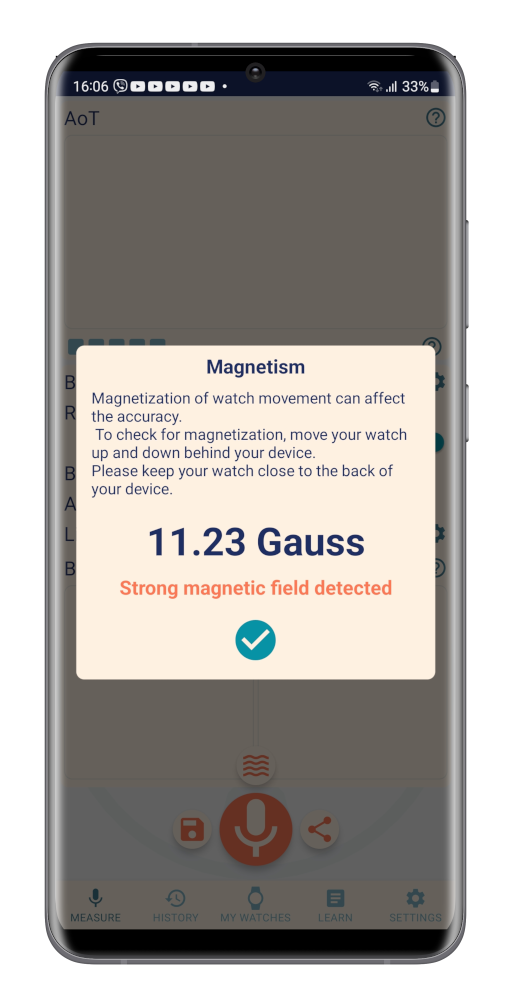
Magnetism
Magnetization of watch movement can affect the accuracy. The current magnetic field will be expressed in Gauss.
AoT
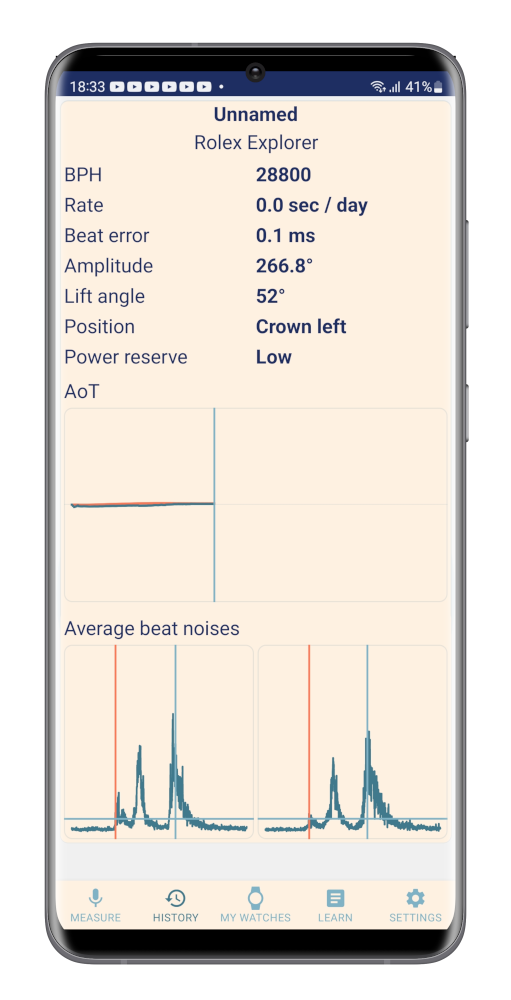
Track the changes in beat rate and beat error on a graph. The rate is represented by the steepness of the dotted lines and the error by the distance between the two lines.
Beat noises
If you are measuring a watch with the most common (swiss lever) escapement, you will see a graph with 3 peaks (unlock, impulse and lock sounds). The noises can tell a lot about the health of the watch movement.
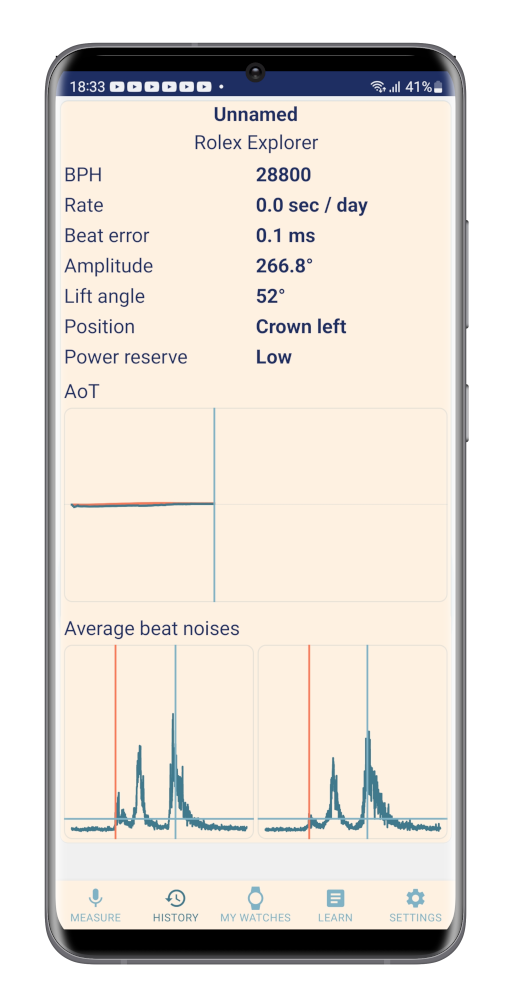
Position
Gravity affects the oscillation of the balance wheel what responsible for the accuracy, so the position of the watch should be considered during movement regulation.
Power reserve
How much power is left on the main spring (the watch recently wound or not) can affect the accuracy of the watch.
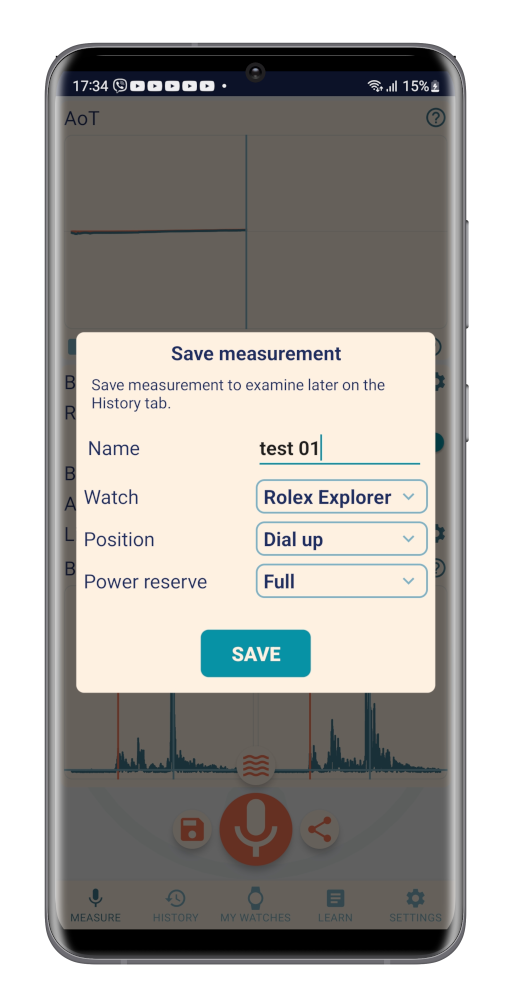
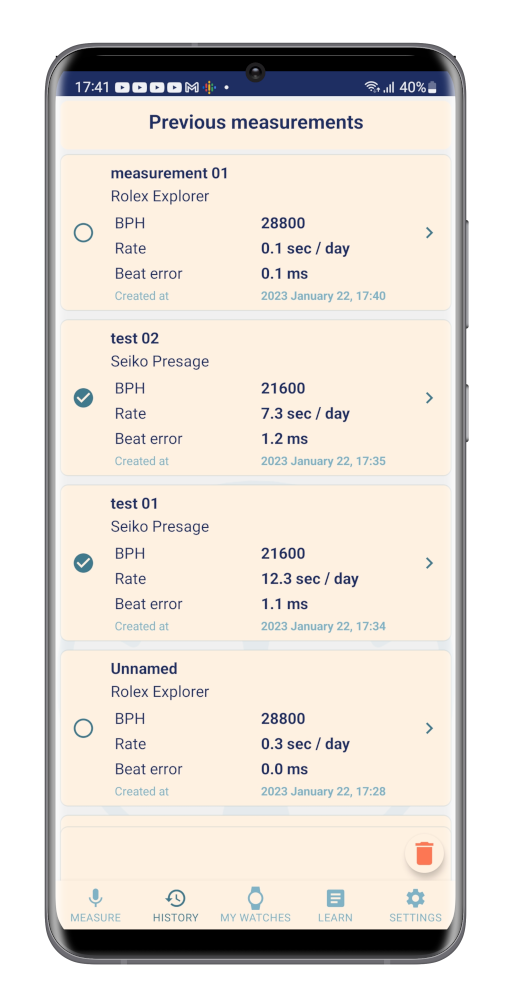
Measurements
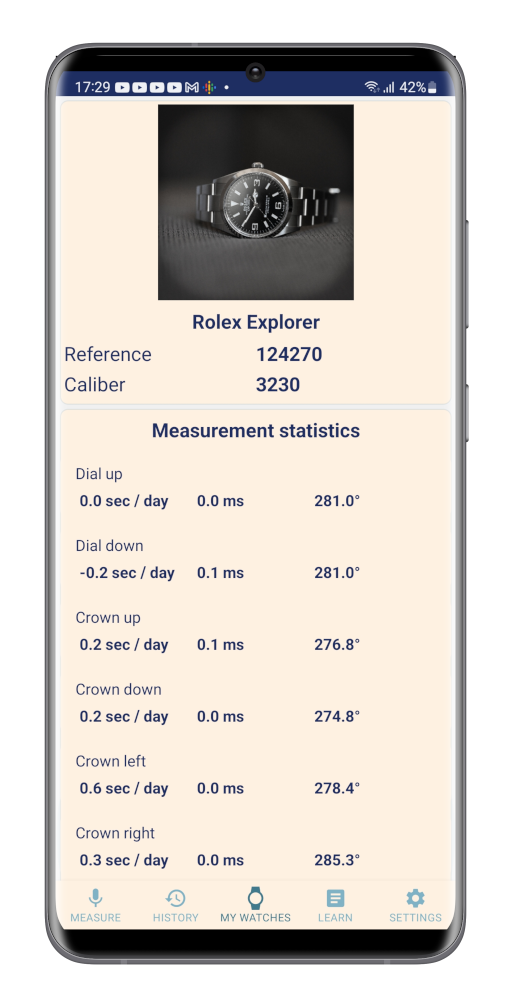
All the measurements are organized by watch, position and power reserve.
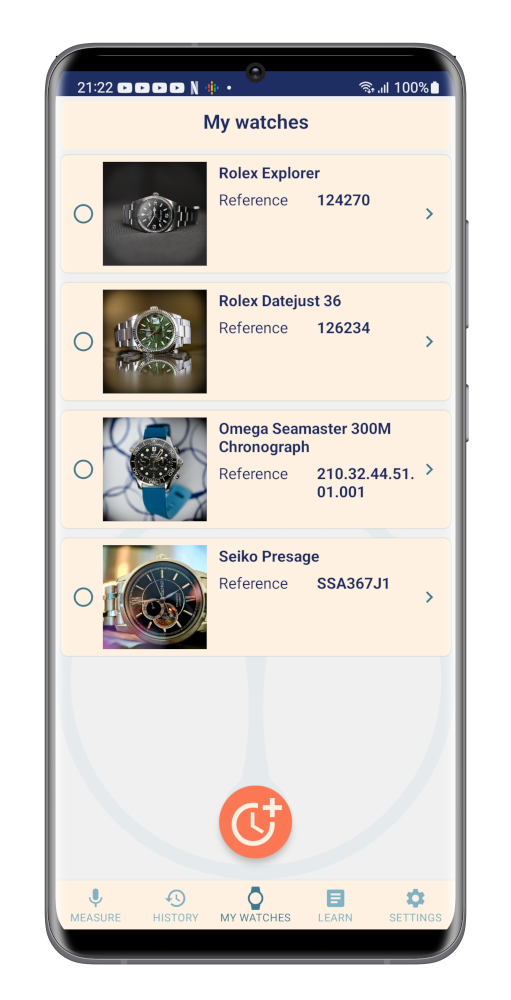
Watches
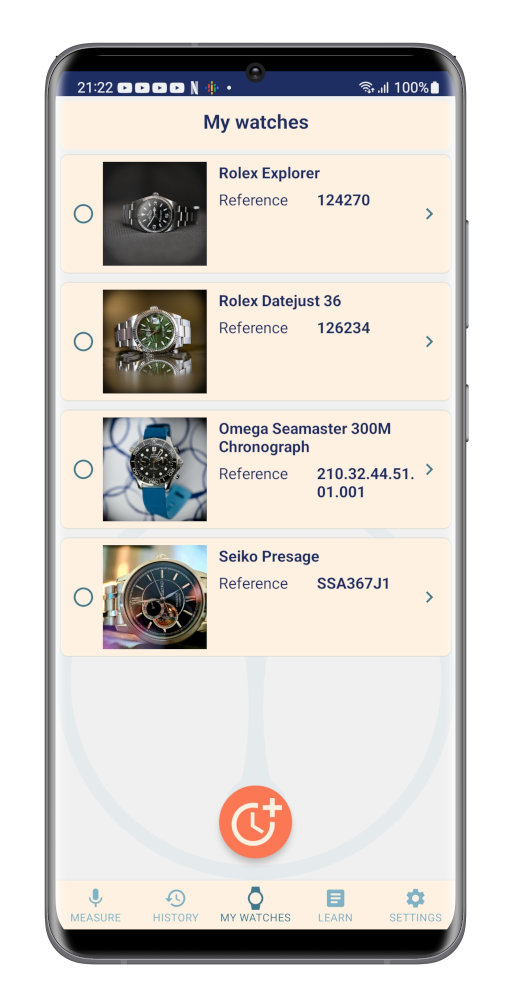
You can manage your watch collection, add photos, reference numbers, movement calibers.